8 Steps to Invest in Commercial Real Estate with No Money Down

Most people think commercial real estate investing (CRE) is a game only for the ultra-rich – executives with fat bank accounts or real estate investors with decades of experience.
But here’s the truth: some of the smartest deals are made by investors who know how to invest in commercial real estate with no money down, instead of using mountains of cash.
If you don’t think this applies to you, it’s probably because you’ve faced these three barriers:
- You don’t have the financing for a huge down payment or upfront fees.
- Deals feel complicated, with confusing financing options, legal hurdles, and due diligence requirements.
- The risk of making a costly mistake is intimidating, and you don’t want a bad investment to sink your financial situation.
Yet imagine walking into a multifamily building or office space and securing it without a single bank transfer, knowing you’re protected from major risks.
Sounds impossible? It’s not.
With the help of creative strategies trusted by top-tier investors, even a beginner can start commercial real estate investing confidently.
In a market where interest rates are shifting, vacancies are fluctuating, and opportunities move fast, the investors who act first (and smart) are the ones who win.
This guide will show you how to invest in commercial real estate with no money down - and turn a “rich person’s game” into an accessible path for anyone ready to take bold action.
List of contents:
- How much money do I need to invest in commercial real estate?
- An 8-step guide on how to invest in commercial real estate with no money
- How to invest in commercial real estate with no money safely: Common mistakes to avoid
- How Duckfund can help you start investing with no money
Imagine investing in commercial real estate without dipping into your own capital. Contact Duckfund to find out how we make this possible.
How much money do I need to invest in commercial real estate?
Every budding investor asks themselves several questions:
- How much down payment for commercial property do I need?
- What financing options exist beyond traditional lenders?
- Can I really learn how to purchase commercial real estate with no money?
- How can I start building a portfolio without tying up my own cash?
The truth is, you don’t need to be flush with savings to start. Many investors begin with little or no money by using creative financing strategies, partnerships, or soft deposit solutions that cover upfront costs.
With the right approach, you can secure your first property, generate rental income, and start building equity, without touching your personal bank account.
It’s about working smarter, not harder, and using the tools available to turn opportunity into ownership.
An 8-step guide on how to invest in commercial real estate with no money
Creative investment strategies are making it possible to turn what seems like a rich person’s game into a practical path for beginner investors, or anyone who wants to expand their property portfolio.
Read on for eight practical steps that will help you make sure one of those people is you.
1. Define your commercial real estate goals
Before you look at a single property, you must first clarify your investment strategy. Ask yourself the following questions to make sure you take the right route:
- Are you aiming for passive income or an actively managed portfolio?
- Do you want short-term gains or long-term appreciation?
- Are you focusing on office space, multifamily properties, or owner-occupied buildings?
Even small business owners can benefit from commercial real estate investing. For example, buying a building for your operations can save on rental income and build equity over time.
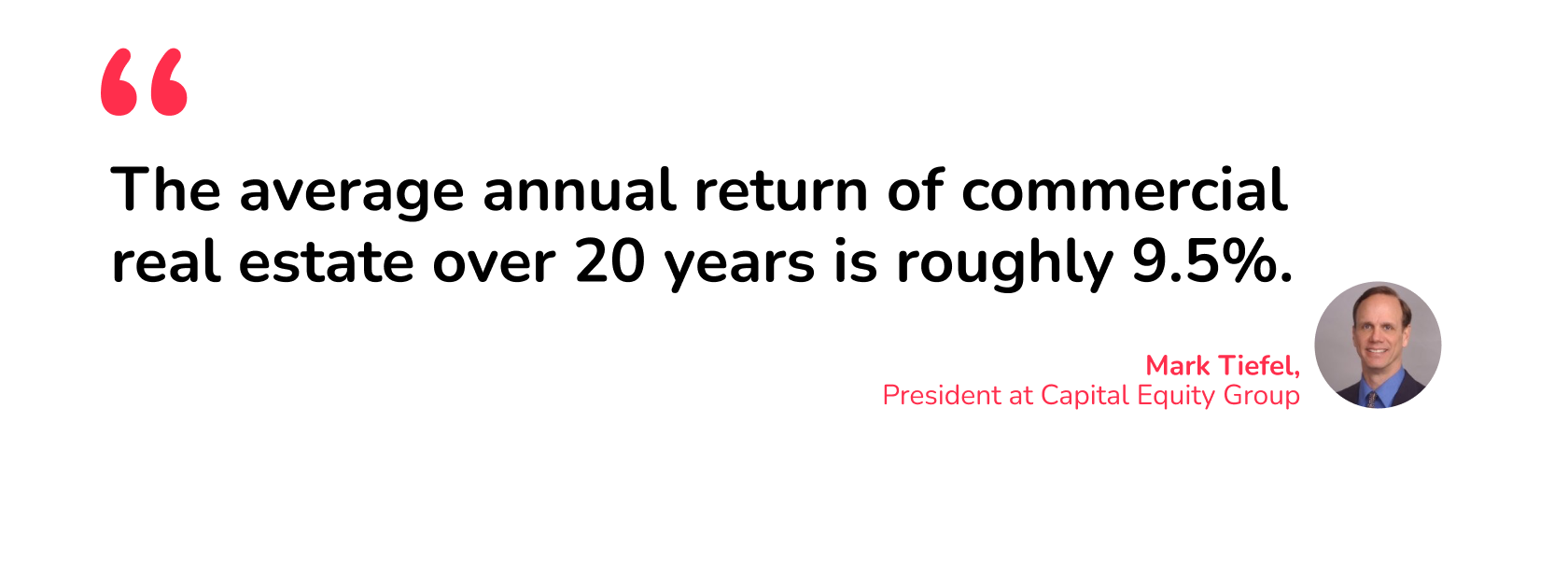
“The average annual return of commercial real estate over 20 years is roughly 9.5%, nearly 1% greater than the S&P 500's average annual return of 8.6% over the same period of time,” says Mark Tiefel, President of Capital Equity Group, Inc., a private real estate investment firm.
Setting out your investment strategy, then, is well worth it. This way, you’ll position yourself best to make the most of equity gains over the long term.
Top tip: Start small. One well-chosen investment property can teach you the ropes of due diligence, cash flow analysis, and property management, while giving you confidence to scale later.
2. Learn the basics of how to start investing in commercial real estate
Knowing how to buy commercial property with no money down involves knowing how to do the opposite: buying property with money.
You must learn the rules of the game before you play it, after all.
This means studying the following figures in your target areas:
- Capitalization (cap) rates
- Average rental income
- Vacancies
- Property value
- Diversification opportunities
Investment opportunities aren’t always obvious. Some CRE investors focus on residential properties converted into commercial rentals, for example. Others explore real estate crowdfunding platforms for fractional ownership of large commercial real estate deals.
Top tip: Build a network of real estate agents, lenders, and property owners. Even a casual conversation with a capable commercial real estate investor can reveal deals off-market or creative financing options you wouldn’t find on your own.
3. Understanding commercial loans and down payment requirements
Before you can get creative with financing, it helps to untangle deposit terms that often trip up new investors when it comes to securing their first deal.
The earnest money vs down payment question is the most common of these.
Put simply, an earnest money deposit is the upfront cash you put down to show a seller you’re serious about buying commercial real estate.
This amount can vary wildly depending on the state: earnest money in Michigan, for example, typically ranges from 1% to 3%, while in fast-moving markets like New York it often reaches 10% or even 15%.
An EMD is, however, refundable once contingencies, like property inspections and financing, are met.
You may hear the term earnest money or soft deposit financing, too. This is a financial mechanism that covers earnest money (or soft deposit) on your behalf so you can lock in deals without tying up personal capital.
The minimum down payment on commercial property, meanwhile, is the larger chunk (often 10–30%) paid at closing to secure your loan.
Think of it this way: EMDs and soft deposits get you in the game, while down payments close the deal.
Knowing how each works is the foundation for using no-money-down strategies effectively.
Loan options when you don’t have a large down payment
Even if you don’t have piles of cash, you’re not locked out of the commercial real estate market. Several financing tools are designed to help beginners or investors with limited liquidity, including:
- Traditional commercial loans. These typically require 20–30% down, with terms influenced by your credit score, financial history, and the property’s cash flow potential.
- SBA 504 or 7(a) loans. Ideal for small businesses buying owner-occupied buildings, sometimes requiring as little as 10% down.
- Bridge loans. Short-term financing that lets you move fast on commercial real estate deals while arranging long-term funding.
- Real estate crowdfunding. Platforms that allow you to participate in large commercial property deals with minimal out-of-pocket investment.
Top tip: Know your numbers. Always calculate cash flow and expected rental income before committing to finance. Knowing what’s a good cap rate for commercial real estate is also key.
And remember, even indirect vehicles like REIT ETFs or mutual funds can be a smart entry point if direct ownership isn’t feasible yet.
4. Look into seller financing
We’ve looked at how to start investing in commercial real estate with little money, but it’s possible to go one step further – doing it with no money.
Seller financing in commercial real estate is one of the most common ways of achieving this. Investors who use it find it much easier to grow their portfolio than those who don’t.
Instead of going through a traditional lender, the property owner agrees to act as your lender. You negotiate the purchase price, interest rate, and payment schedule directly with the seller. The beauty of this is that it greatly reduces or eliminates the need for a down payment.
Real-world example
Buying a building for your business is listed for $500,000. Instead of putting 20% down, the owner agrees to finance the entire purchase over 10 years at a fixed interest rate.
You make monthly payments directly to the seller, save on higher rental payments that you would have paid, and gradually build equity in the property – all without dipping into your personal savings.
Why it works
- It reduces upfront costs and the down payment required.
- It speeds up the buying process since you don’t rely on traditional lenders.
- Flexible terms can be tailored to your cash flow situation.
Top tip: Always ask the seller why they’re offering financing. If they’re motivated to sell quickly, you’ll have more leverage to negotiate better terms, like lower interest rates, longer repayment windows, or even zero down.
5. Explore partnerships
Partnering with another investor allows you to combine resources, including capital, deal sourcing, property management, and financial strategy.
If you’re short on funds, you can make up your side of the bargain by doing the legwork in finding the property and arranging the deal. This is especially useful when you have knowledge or skills in these areas.
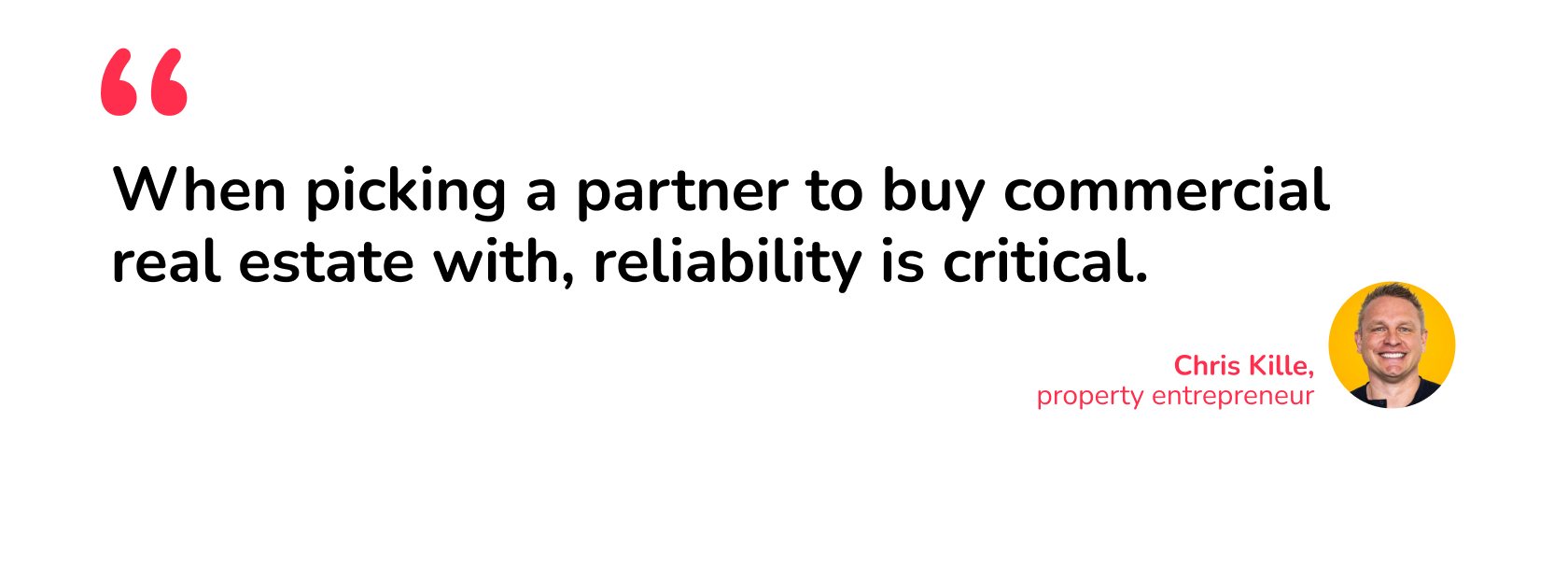
However, be sure to pick well. “When picking a partner to buy commercial real estate with, reliability is critical,” says Chris Kille, a property entrepreneur speaking to Forbes. “You should look for a partner who has verified funds, a track record of transparency, and a history of quality investments that precede you.”
Real-world example – Buying an apartment complex with no money
Partnerships can be the solution if you’re looking into how to buy apartment buildings for no money.
Here’s a real-world scenario. You identify an apartment complex with strong rental potential, but don’t have the down payment. You find a partner willing to cover the upfront cost, while you handle tenant placement, renovations, and ongoing property management.
Both parties share profits according to a pre-agreed structure, and you gain hands-on experience in commercial real estate investing.
Why it works
- It combines the strengths of each partner
- It reduces the personal financial risk involved
- It opens doors to larger deals than you could afford alone
Top tip: Put everything in writing. Even if you trust your partner, a clear agreement on roles, responsibilities, and profit splits will save you headaches (and money) later. Think of it as insurance for the partnership.
6. Use soft deposit (or earnest money) financing
Soft deposit financing is a fast-growing tool for investors learning how to get a commercial loan with no money down.
Think of it as a bridge for investors who spot a hot deal but don’t have immediate cash for the earnest money deposit.
Instead of watching the opportunity slip away, companies like Duckfund offer soft deposit financing. This funding covers earnest money deposits or other upfront fees that traditionally block commercial real estate investors with limited capital.
In short, this allows you to secure the property and demonstrate commitment without spending out-of-pocket cash.
Real-world example
You find a promising multifamily property and need a $100,000 earnest money deposit to secure the deal. Instead of digging into your savings, Duckfund covers the deposit. The seller sees a committed buyer, and you have time to arrange financing or partnerships for the purchase.
Why it works
- It enables investors to move fast in a competitive market.
- It keeps cash available for renovations, operating expenses, or other investment opportunities. With Duckfund, for example, you can work on multiple deals at once.
- It lowers the barrier to entry for beginners and helps them on their way to building a solid portfolio.
Top tip: Speed is your biggest advantage. The faster you can lock in a deal with a soft deposit, the less chance another investor has to swoop in. Duckfund, for example, pays your deposit within 48 hours of application.
Always have your financing partner on standby so you can act within hours, not days.
7. Minimize risk by doing due diligence
When you’re investing with little money, every dollar counts — and every mistake gets magnified. That’s why due diligence is your safety net, rather than just another box to tick.
Start with the basics: property value and condition. A shiny exterior can hide expensive structural issues. Then check zoning regulations: nothing kills a deal faster than realizing your dream multifamily can’t legally be used for rental property.
Next, dig into the numbers. What’s the rental income? Vacancy rate? Tenant quality? Reviewing leases upfront can reveal red flags like expiring contracts or under-market rents.
On the financing side, verify your options. Can you tap SBA loans, seller financing, or a soft deposit solution to stretch your cash further? Each one changes your risk profile.
If you’re new, don’t go it alone. An experienced real estate agent or consultant can spot pitfalls you’ll miss.
Top Tip: Verify every detail, even if it slows you down. Cutting corners on due diligence feels like saving time, until it costs you thousands in surprise repairs or legal headaches.
8. Close the deal and plan for growth
Closing day for your first property isn’t the finish line but the starting block.
Once the paperwork is signed, you need a growth plan that maximizes every dollar of your investment.
Start by looking at refinancing options once you’ve improved the property or stabilized rental income. A refinance can free up equity to fund your next commercial real estate deal, so you can scale faster without tapping personal savings.
Don’t put all your eggs in one basket, either. You can spread risk in later purchases by diversifying types of commercial property across the multifamily, office, and residential sectors to create multiple streams of income.
REITs, property ETFs, and mutual funds can also help you line your nest.
Top tip: Think long game. Each building is a stepping stone. Even if you started with no money down, regular reinvestment and smart portfolio choices can turn a single deal into a lasting commercial real estate strategy.
How to invest in commercial real estate with no money safely: Common mistakes to avoid
Even veteran commercial real estate investors stumble, especially when money is tight and the stakes are high.
The biggest trap? Over-leveraging without positive cash flow. Debt can be a tool, but if the numbers don’t work, it will devour your profits.
Another classic misstep is ignoring fundamentals like cap rate or rental income projections, hoping appreciation will rescue a weak deal. Spoiler: it rarely does.
Skipping due diligence is another fast track to disaster. A property might look perfect on paper, but hidden zoning issues, deferred maintenance, or tricky lease agreements can turn your dream into a nightmare. Underestimating management costs or vacancy risk compounds the problem.
And a big one many beginners miss? Choosing the wrong funding provider. High fees, slow approvals, or opaque terms can sink a deal before it even starts.
Top Tip: Treat mistakes as tuition. Learn once, move on, and protect your cash flow every step of the way.
How Duckfund can help you start investing with no money
This is where creative financing stops being theory and starts working for you.
Duckfund specializes in soft deposit financing that covers earnest money deposits so you can secure properties without draining your cash reserves.
Built for busy investors, Duckfund’s platform and support team handle the mechanics, letting you focus on closing deals and growing your portfolio.
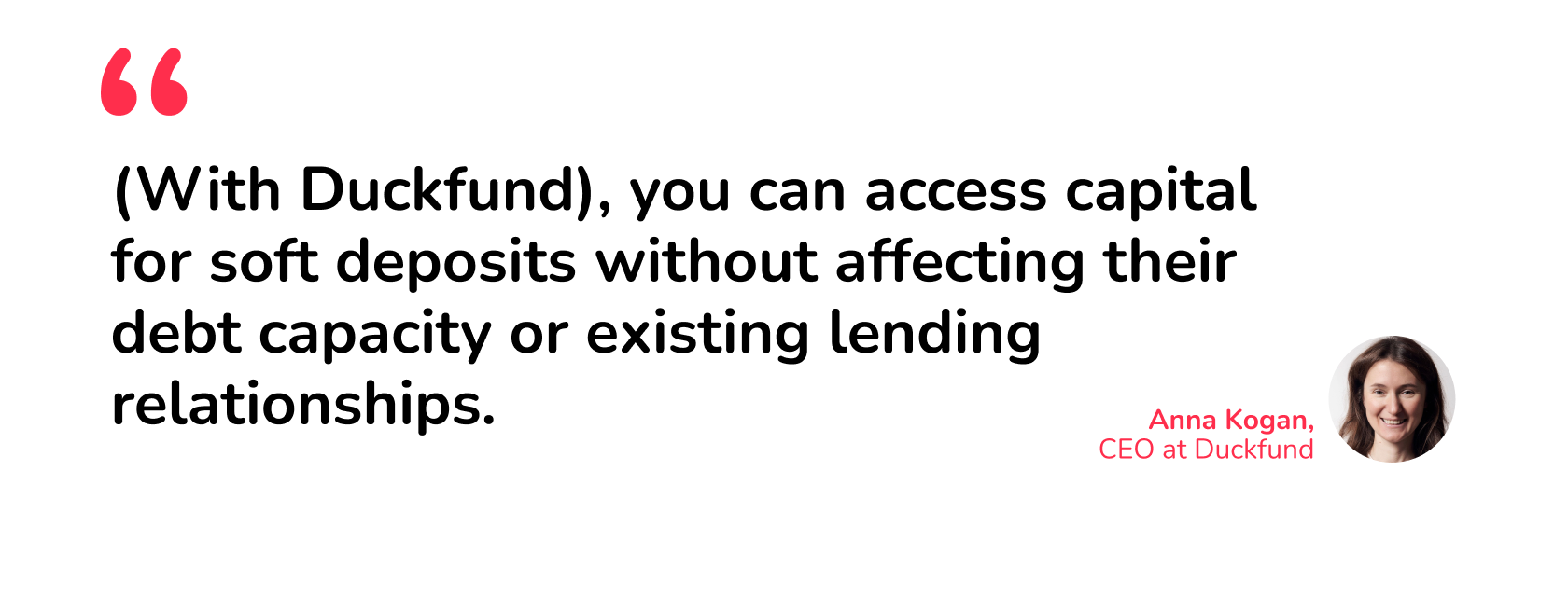
“We’ve structured our offering as a service product, not a loan,” says CEO Anna Kogan. “Investors can access capital for soft deposits without affecting their debt capacity or existing lending relationships.”
Instead of scrambling for $25,000+ to secure a deal, you can apply online in minutes, get funded instantly, and demonstrate commitment to sellers.
Duckfund removes upfront barriers to let you compete in a fast-moving market while keeping your cash free for your next investment opportunity.
Ready to grow your CRE portfolio? Sign up for Duckfund and start investing in real estate with no money down.
Real Estate
Financing

- Approval within 24 hours
- Fund multiple properties at once
- No full deposit upfront — soft deposit only
- Apply in under 2 minutes
Secure your next commercial property acquisition — zero upfront capital required.
Start with Duckfund’s EMD financing program.- No capital commitment
- Close faster
- Scale with confidence